




15 Best Barefoot Hiking Shoes & Boots (That Actually Fit Real Feet)

 REVIEWER FIT REFERENCE
Affiliate disclaimer

Traditional hiking shoes are usually stiff, narrow, and overbuilt in all the wrong ways. They squeeze your toes, limit natural movement, and often feel more like heavy protective gear than something you actually want to hike in. That’s why barefoot hiking shoes and boots make so much more sense to me.
Here are the barefoot hiking shoes and boots that held up best, plus a few wide toe box hiking shoes that earned a place here too.
This isn’t a roundup built from specs and stock photos. We tested every shoe on this list on real terrain: mud, wet leaves, rocks, water, and forest trails, sometimes even wearing two different shoes at once, one on each foot, just to feel the differences properly. So the shoes here earned their place.
Update (May 2026): This guide now includes new brands and models, expanded real-life testing notes, fresh visuals to show outsole and trail-feel differences, and updated recommendations throughout based on our latest hands-on comparisons.
What Makes a Great Barefoot Hiking Shoe?
Before we dive into specific models, let’s quickly cover what defines a great barefoot hiking shoe or boot.
These are the key things we look for when testing and recommending hiking shoes with a more natural, foot-friendly design:
✅ Zero-drop sole – no height difference between heel and toe for natural alignment
✅ Wide toe box – allows your toes to spread out instead of squeezing them together
✅ Flexible sole – this gives the most natural movement and ground feel, but some hikers prefer a bit more protection for longer distances or rougher terrain
✅ Secure fit – keeps your foot stable on rocky or steep trails
✅ Durable outsole with good grip – essential for safety and long-term performance
✅ Weather protection – optional, but useful for cold, wet, or muddy conditions


⚠️ Note: In our experience, the most natural hiking feel comes from a thin, flexible sole that lets your foot bend and respond to uneven terrain. But not everyone wants the same amount of ground feel. Some hikers prefer a bit more cushioning and protection for long distances, rocky trails, or an easier transition from conventional hiking shoes.
That’s why we’ve organized this list by sole thickness – because how much ground feel you want (and how much protection your feet need) can really change your hiking experience.
If you’re still figuring out whether barefoot shoes are a good match for hiking, read Are Barefoot Shoes Good for Hiking? first.
Best Barefoot Hiking Shoes with Minimal Cushioning
(Medium sole thickness – best balance for hiking, all-rounders)
These barefoot hiking shoes and boots strike the perfect balance between trail protection and natural movement. The soles are still flexible and zero-drop (so you stay connected to the ground) but they include either a slightly thicker base or a soft insole to help reduce the bite of sharp rocks and rough terrain.
That little bit of extra cushion goes a long way on longer hikes, making these options ideal for most people, especially if you’re transitioning from traditional hiking boots or want something that works for a variety of trail types.
Freet


Use code BU_FREET for 10% discount
Freet is the brand I most strongly associate with barefoot hiking shoes. They have one of the widest outdoor ranges out there, with different materials, different levels of protection, and several outsole options depending on what kind of terrain you need them for.
Their hiking models are built on three outsole types: MountainGrip for the most aggressive traction, HillGrip for steeper and wetter ground, and TrailGrip for more general trail and everyday use. All of them stay soft and flexible, with a removable insole that adds a bit of cushioning without taking away the barefoot feel completely.
From the boots, my personal favorite is the Bootee 2. It’s the softest of their hiking boots and feels the most natural on foot. For hiking shoes, Feldom 3, Calver, and Connect are all strong options. It just depends on what you need. Feldom 3 and Calver are great for dry weather and everyday outdoor use, while Connect gives you a fully waterproof option.
Freet works especially well on dry and mixed terrain. I do find their soles a bit more slippery on wet ground than some of the stronger wet-grip options on this list, so that’s worth keeping in mind if you hike a lot in slick conditions. Overall though, I really love their shoes. They’re comfortable, flexible, easy to wear, and many of them also work great as everyday sport shoes.
Their newer designs are also wider than some older models and now fit wide feet really well, while still being adjustable enough to work for narrower feet too in most cases.


Sizing & Fit:
- Best for medium and wide feet
- Newer models fit wider than older ones
- Most models can still be adjusted to work for narrower feet
- I usually size up one full size in models with thicker lining
- Fit can vary a bit by model, so it’s worth checking the individual specs
- Most styles work well for different instep heights and foot shapes
Want to dive deeper? Read our full Freet brand review here →
VIVOBAREFOOT Hiking Shoes & Boots


Use BU15 for 15% discount
VIVOBAREFOOT has been one of the strongest names in barefoot hiking for years, with a wide range of models that cover everything from low-cut trail shoes to waterproof and insulated boots. If you want a brand with lots of options for different terrain and weather, this is still one of the best places to look.
One of our favorite all-rounders is the Tracker Leather, which also comes in an insulated winter version. It has good grip across different terrain and feels like one of the most capable mountain-ready options in the VIVO range. For something lighter and easier to wear, the Primus Trail Flow is a really nice alternative. It has a vegan upper with a stretchy elasticated ankle, which gives it more of a slip-on feel than a classic hiking boot. If you prefer a low-cut model, the Tracker Leather Low works well for lighter hikes and everyday outdoor use. There’s also the Tracker Forest ESC, which stands out for its especially strong grip on loose ground and muddy trails.
VIVO uses different outsoles across the range, including Firm Ground, Soft Ground, and ESC, so the feel and grip can vary quite a bit depending on the model. In general, I find their leather models more comfortable in actual use, especially when it comes to breathability and sweat. The vegan options do work, but they tend to run hotter and feel less breathable on longer hikes.

Sizing & Fit:
- Best for narrow and medium-width feet
- The toe box is foot-shaped, but not the widest on this list
- Men’s models fit slightly wider than women’s, including through the midfoot and heel
- Runs true to the size chart
- I wear EU 42 with a foot size of 26.3 cm, but women’s models are already too narrow for me in width
Want to learn more about sizing, outsole types, and specific models? Check out our full VIVOBAREFOOT review here.
Xero Shoes Scrambler and Scrambler Mid Hiking Shoes


Xero Shoes offers a wide range of barefoot hiking shoes and boots, with options for everything from light trail use to more rugged terrain. They also make some great barefoot hiking sandals, but for trail performance our top picks are still the Scrambler Low and Scrambler Mid.
Both Scrambler models feature a Michelin outsole with 3mm lugs, offering excellent traction and durability for rocky and uneven terrain. The sole has less softness and give than some other brands on this list, which can be a plus if you prefer a firmer and cushioned feel underfoot or want a bit more protection over long distances.
The Scrambler Mid II has a breathable upper and a firmer heel cup than what we typically see in barefoot shoes. It might feel restrictive at first, especially if you’re used to softer, more flexible heels. But it does come with top speed hooks for fast, adjustable lacing that helps prevent foot slide on descents.
Fun fact: On a windy spring day, I could literally feel the breeze blowing through the shoe—these are some of the most breathable hiking boots we’ve tested!
If you need a waterproof option, the Scrambler Mid WP holds up well in wet conditions (we tested it by walking through streams), though it can feel warmer and less breathable due to the membrane.
If you prefer a low-cut style, the Scrambler Low offers the same grippy outsole with a more breathable, trail-runner feel. It’s available in a few fun colors too, if you’re not into the all-black hiking boot look.
For fully waterproof trail running shoes, the Mesa Trail WP is another option – but be aware, they tend to trap heat and can make your feet sweaty, especially in warmer weather.
Sizing & Fit:
- Best for narrow and medium-width feet (leaning towards narrow)
- Overall straight shape with more width and volume in the midfoot and heel
- Men’s models are wider than women’s
- Work well for various foot volumes, but the toe box can feel roomy for narrow, low-volume feet
- Runs true to the size chart (except the Mesa Trail WP, which runs slightly short)
- I usually size up ½ to 1 full size to get enough width and toe space (wearing EU 42 with foot dimensions 26,3/10 cm)
Want more details on sizing, models, and comparisons? Check out our full Xero Shoes review here.
BÄR Shoes


Use BU10 for 10% discount
BÄR makes some of the most premium-feeling barefoot hiking shoes on this list. The materials, construction, and overall finish really stand out, and on the trail they feel like shoes built for people who actually spend a lot of time walking in them.
The Mountain Barefoot has a sole that wraps slightly around the midfoot, while the Mountain Barefoot 2.0 no longer has that wrap. Both keep the same overall feel: thin, fairly minimal soles with a little cushioning, a free and unrestricted ankle, and a lacing system that is easy to adjust and holds the foot securely without much fuss. It actually looks very similar to their model I bought around seven years ago and still have, so I was really glad to see BÄR bring that design back.
BÄR also makes other waterproof hiking shoes and boots with thicker soles, which may suit people who want more cushioning and a more forgiving ride over longer distances.
Overall, BÄR feels especially good if you want something that still moves naturally but feels refined and well made. The Mountain Barefoot line is one of the models here that manages to feel minimal without feeling flimsy.
Sizing & Fit:
- Available in half sizes for a more precise fit
- Best suited for medium-width feet
- Men’s versions have slightly more volume in the toe and midfoot than women’s
- I sized up by ½ size to allow extra room for thicker socks and foot swelling on long hikes
- Best for average foot volume
Proalp Contact S2


Use BU5 for 5% discount
Proalp hiking boots are one of the more rugged barefoot options on this list and a strong choice for rougher terrain. They stood out for their grip, especially in wet conditions, where they felt more secure than many lighter barefoot hikers. If you want something that still feels barefoot but gives a bit more protection and confidence on technical trails, these are worth a look.
They’re handmade in Slovenia and come with durable leather uppers, Vibram outsoles, and a nice balance of flexibility and structure. Another big plus is the fit range: they come in three different widths, and the widest option works well even for extra wide feet. They work better for narrower or average ankles and a lower to average instep, so they’re not the best match for wider ankles or a higher instep. You can also customize details like the color, materials, and whether or not you want the top velcro strap.
They’re not fully waterproof, but the leather handles damp conditions well and can be treated for extra water resistance. They also come with removable wool insoles, which are great for colder weather, though they do take up some space inside the boot and reduce ground feel a bit.
Sizing & Fit:
- Available in men’s and women’s sizes
- Offered in three widths
- Ideal for narrow to extra-wide feet (in the widest width)
- Best for narrow or average heels and ankles and low and average foot volume
- Comes with wool insole – remove if you need more space or greater ground feel
Softstar Shoes Switchback II


The Softstar Shoes Switchback II is one of the most premium-feeling barefoot hiking boots on this list, with beautiful leather, a foot-friendly shape, and the grippiest sole of the whole bunch. In our testing, it performed best on wet, slippery surfaces and felt especially secure when the ground got slick. If grip is high on your priority list, this is one of the strongest options here.
The updated Switchback II also fixes one of the issues from the previous version. There is now more space above the toes, so you don’t get that same pressure from the top of the shoe, which makes the fit feel more comfortable overall. The leather feels high quality, the laces stay tied really well, and the boot has a very solid, durable feel without losing its barefoot shape.
The sole is still on the thicker side, with more cushioning and protection than some other barefoot hiking boots on this list. You still get good ground awareness, but the overall sole construction does feel a bit heavier compared to the upper. That extra weight may be worth it if you want better grip, more durability, and a slightly more protective ride.
Water resistance also seems improved in this version. In our water test, the Switchback II stayed dry inside, which is a clear step up from the older model.
Sizing & Fit:
- Available in Regular and Wide widths
- Only the Wide version is fully foot-shaped
- The Wide version works well for extra wide feet
- Works best for low and medium instep heights
- Runs true to size, but sizing up can be a better choice if you wear thicker socks or are near the top of the size range
- I wear the Wide in US 10 with a foot length of 26.3 cm
Saguaro


Use BU20 for 20% discount (new costumers)
Use BU15 for 15% discount (existing customers)
Saguaro is one of the most affordable barefoot hiking shoe options out there, and a reasonable starting point if you want to try barefoot hiking without spending too much. They don’t feel as refined or durable as the more premium brands on this list, but for easier trails, casual hikes, or occasional use, they do the job surprisingly well.
The grip is decent, though not something I’d trust as much on more technical or slippery terrain. This is really where the lower price shows up: the materials and overall feel are simpler, and the shoes don’t have the same secure, trail-ready confidence as the stronger performers on this list. Still, if you want something lightweight, inexpensive, and easy to throw in a backpack, Saguaro can make sense.
One thing to keep in mind is that Saguaro changes its models often, and the fit can vary quite a bit between them. Some shapes are better, some are more tapered, so it’s harder to expect the same fit consistency you get from other brands.
Sizing & Fit:
- Best for medium-width feet (but some variation in fit between models due to frequent updates and different sole shapes)
- Works well for different foot volumes
- Different sole shapes across models – some are more tapered than others
- I usually size up for a better fit
Best Barefoot Hiking Shoes with Super Thin Soles
(For experienced hikers who want maximum ground feel)
These are for barefoot hiking purists who want to feel every root and rock. Ideal for natural terrain, forest trails, and hikers who already have strong feet.
Doghammer


Use BU10 for 10€ discount
Doghammer Terrar is one of the more minimalist hiking options on this list and a great pick if natural materials matter to you. The upper is made from suede and lined with merino loden, which gives the shoes a very different feel from the more synthetic trail models here. Overall, they feel light, flexible, and really well made.
They performed especially well on forest trails. In testing, they handled wet grass and leaves surprisingly well without leaving me with wet feet, which made them feel more capable than they might look at first. The Vibram sole gives decent grip overall, though I did notice some slipping on steeper dry terrain, so I wouldn’t put them among the strongest performers for more demanding mountain use.
One design detail that takes a bit of getting used to is the lacing. The laces run all the way down toward the toe area, which looks unusual at first, but it does let you adjust the fit really well and get a secure hold around the foot. I’d use Doghammer more for forest hikes, lighter outdoor use, and for people who want a very flexible shoe made with more natural materials.
Sizing & Fit:
- Best for medium-width feet
- You can size up for a bit more width and volume
Ahinsa Shoes


Use BU10 for 10% discount
If you’re after a super lightweight barefoot hiking shoe that’s 100% vegan, Ahinsa’s Chitra Trek & Trail is one of our top picks—especially for spring and summer hiking.
The barefoot version comes with an ultra-thin, removable insole and gives you tons of ground feel, while the Comfort version includes a lightly cushioned insole with a slight heel rise (so it’s not truly barefoot, but still foot-shaped). Both versions are soft, super flexible, and feel more like a barefoot sneaker than a rugged hiker – perfect if you value freedom of movement and aren’t tackling steep or rocky terrain.
If you’re looking for a waterproof barefoot hiking boot, check out their Hiker model. It’s surprisingly lightweight for a boot, has deep lugs with great grip, and also comes in an xWide version – ideal if you want more ankle protection or plan to hike in wet and muddy conditions.
One thing to note: the synthetic vegan upper isn’t breathable enough to go sockless, especially in warm weather. I’ve found that wearing toe socks makes a big difference in comfort and prevents the insole from sticking to the foot. But if ground feel and softness are what you’re after – and you want to avoid animal products – Ahinsa really delivers.
Sizing & Fit :
- Fits medium and wide feet
- Extra-wide version available for extra wide feet
- Works best for low and average foot volume
- Runs true to size chart – I wear size 43 with foot dimensions 26.3 / 10 cm
Saltic


Use BAREFOOTUNIVERSE10 for 10% discount
Saltic’s barefoot hiking shoes are not as well known as some other brands, but they earned their place on this list. They have a thin sole with good ground feel and surprisingly solid grip, even without deep lugs. In testing, they handled uneven and mildly slippery terrain better than you might expect just from looking at the outsole.
The upper is durable and feels well suited to rougher use, without making the shoe feel bulky. The sole is thin, but not overly soft or squishy, so you still get a good amount of feedback from the ground with a slightly firmer feel underfoot. That gives them a nice balance if you want something more minimal but not too floppy.
One thing to know is that the tongue is sewn in on one side, which helps keep it in place but also makes the shoe a bit harder to get on. On the higher OUTDOOR High model, the back edge did press into the Achilles at first, especially on downhill walks. That improved over time, but it’s still something worth noting. The low-cut version didn’t cause the same issue and felt comfortable straight away.
Sizing & Fit:
- Runs true to size chart
- Best for medium-width feet
- Ideal for average foot volume
Magical Shoes


Use BU10 for 10% discount
Magical Shoes makes some of the lightest hiking-style shoes on this list. Their models Sierra, Logan, and low-cut Tundra feel much more like lightweight trail or city-to-trail shoes than serious mountain hikers, but for forest walks and easier hikes they are a really nice option.
They have a very thin, flexible sole and feel light on the foot straight away. Even though they look fairly simple, they performed better than expected in wet conditions. In testing, they stayed dry inside even after longer walking through deep water, and the grip was surprisingly good on slippery terrain too. They did slide a bit on a wet hill, so I wouldn’t call them the grippiest option here, but overall the traction was better than I expected.
What stands out most is how easy and unrestrictive they feel. If you want something minimal, flexible, and lightweight for lighter trails, Magical Shoes is a strong option. I’d use them more for forest hikes and everyday outdoor wear than for serious mountain terrain.
Sizing & Fit:
- Best for medium-width feet
- Size up one size from your usual barefoot shoe size
Best Wide Toe Box Hiking Shoes (with Thick Soles)
(Zero-drop options that aren’t fully barefoot but great for cushioning & toe freedom)
Not quite barefoot, but still offering flat soles and wide toe boxes – these are ideal for hikers who need more cushion without giving up natural foot shape.
Lems Shoes


Use BU10 for 10% off at Lems EU
Lems makes some of the most approachable hiking shoes in this roundup. They have a thicker sole than true barefoot models, which makes them feel more forgiving on longer walks and easier hikes. That’s a big part of their appeal. My mum is a big fan of Lems for that reason, and my sister’s favorite is the Trail Blazer.
The Trail Blazer is the lighter low-cut option, while the Boulder Boot Grip and Outlander give you more coverage and a more boot-like feel. Lems also offers waterproof versions, and those held up extremely well in our testing. The designs are great, the materials are solid, and overall they feel like shoes many people will get along with straight away.
For me, the sole is a bit too thick because I prefer more ground feel and a more responsive ride. But that same thicker sole is exactly what makes Lems work so well for people who want more comfort underfoot without going back to stiff, conventional hiking shoes. I’d use them for easier hikes, long walks, and everyday outdoor wear rather than serious mountain terrain.
Sizing & Fit:
- Runs small – we recommend sizing up (follow their sizing guide carefully)
- Works well for narrow and medium-width feet, with a little extra space above the toes
- Great fit for different foot volumes
Altra Lone Peak


Altra Lone Peak is one of the best-known wide toe box trail shoes, and it makes a lot of sense for hikers who want more space for their toes without going into fully barefoot territory. It’s built more like a trail runner than a hiking shoe, with a cushioned sole and a lighter, more athletic feel underfoot.
Compared to true barefoot hiking shoes, the Lone Peak gives you much more cushioning and less ground feel, but it still feels more natural than most conventional hiking shoes because the toe box is genuinely roomy and the platform stays balanced. I see it more as a great option for forest hikes, lighter trails, and long walks than for serious mountain terrain.
In that way, it sits in a similar space to Lems, but with more of a trail-runner feel. It works well for people who want comfort, toe space, and a shoe that feels easy right away. For me, it’s not minimal enough to be a favorite, but I can see why so many people like it as a practical in-between option.
Sizing & Fit:
- Best for medium-width feet
- Some versions are noticeably narrower than others
- Look for models built on Altra’s Original FootShape platform
- I’d recommend sizing up about one size
Bahé Rediscover


Use BU10 for 10% discount
Bahé is a good option if you want a wide toe box hiking boot with a thicker sole and a bit more protection underfoot. It’s also the only boot here with a grounding feature, which makes it stand out from the rest of the list. Overall, it feels like a more beginner-friendly option, especially if you’re transitioning from conventional hiking boots and not ready for a very thin, flexible sole yet.
The outsole has deep lugs and performed well in testing, with solid grip that didn’t feel slippery on rough or slick terrain. The sole is very thick, though, so ground feel is quite limited. The heel also feels firm, and I could notice it while walking, which made the boot feel less natural than some of the more minimal options here.
One feature I did like is the cut around the ankle. The notch at the back allows more movement than most boots with this much structure, though it still feels a bit more restrictive than a truly flexible barefoot boot. Bahé also has a lower-cut model called Rewild, which comes in three different sole thicknesses, so you can choose how much cushioning and protection you want underfoot.
Overall, Bahé makes the most sense if you want a foot-shaped fit, strong grip, and a more protective feel underfoot, with grounding as an extra feature.
Sizing & Fit:
- True to size chart
- Best for medium and wide feet
- Generous space above the toes
- Works best for average foot volume
Xero Shoes Ridgeway


The Ridgeway line is one of Xero’s more cushioned and mainstream-feeling options, with a retro look that makes it easy to wear both on the trail and day to day. There are two versions: the waterproof Ridgeway boot and the Ridgeway Mesh Low, which works more like a multipurpose hiker. Both are on the thicker side for Xero and probably the most cushioned models in their hiking range.
They still keep some flexibility, but don’t expect the same ground feel you get from more minimal Xero shoes. The Ridgeway Mesh Low is my husband’s favorite—he wears it all the time as an everyday shoe, not just for hiking, and has even washed it in the washing machine several times. That says a lot about how easy they are to live with. The sole feels thicker and firmer than models like the HFS, but that extra cushion will suit people who want more protection underfoot.
The boot version has a waterproof upper and more of a classic hiker feel, while the low version is lighter and easier for everyday wear. I did notice a bit of pressure from the collar around my ankle, though my husband didn’t have that issue at all, so that will depend on foot shape and fit. Overall, Ridgeway makes the most sense if you want a more forgiving Xero shoe that still keeps a flat sole and roomy toe box.
Sizing & Fit:
- Best for narrow and medium-width feet
- Fits true to size, but we recommend sizing up ½ to 1 full size, especially if you want more width or wear thicker socks
- Boot version may feel a bit roomier in the midfoot (not ideal for narrow ankles or low volume feet without adjustments)
Best Barefoot & Minimalist Hiking Shoes for Kids
We hike as a family, so finding proper barefoot shoes for our kids is just as important as for us adults. Kids need plenty of toe space, ankle mobility, and lightweight soles – especially when they’re exploring uneven ground or walking for longer stretches.
Kids’ barefoot hiking shoes don’t need to be overly built-up. In most cases, that means skipping rigid high-cut boots unless they’re really needed. A flexible low-cut shoe with a grippy sole and a proper foot-shaped fit is often the better choice. Here are a few of our top-tested picks:
VIVOBAREFOOT Kids
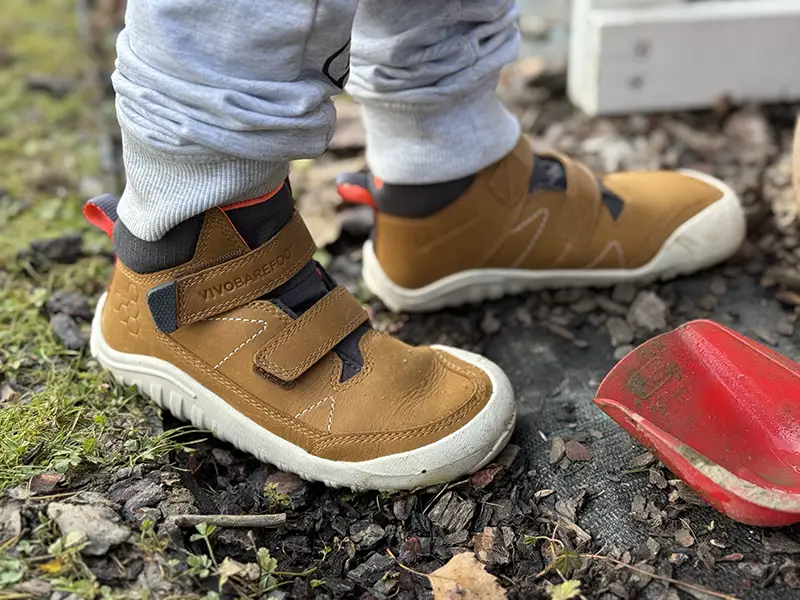
Models: Tracker, Primus Trail, Explore
Why we like them: Durable, flexible, and fully barefoot. Great grip and water-resistant options available.
Fit: Best for narrow and medium-width feet, with a stronger slope toward the pinky toe.
Use BU15 for 15% discount
Saguaro Kids
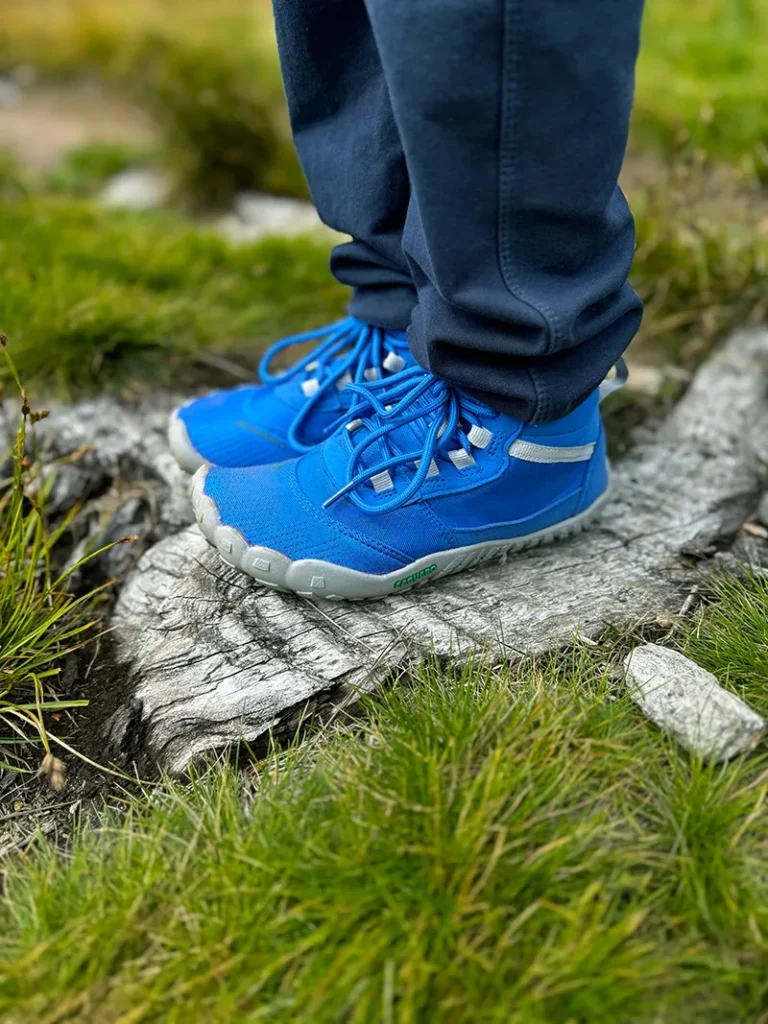
Models: Will II Lite, Vitality I, Fast I, Forestep I, Brave I
Why we like them: One of the most affordable barefoot options for kids – perfect for families just getting started. They offer a range of waterproof and breathable models with flexible soles and a roomy, foot-shaped design.
Fit: Great for medium and wide feet, and available in fun colors kids love.
Use BU20 for 20% discount (new costumers)
Use BU15 for 15% discount (existing customers)
Freet
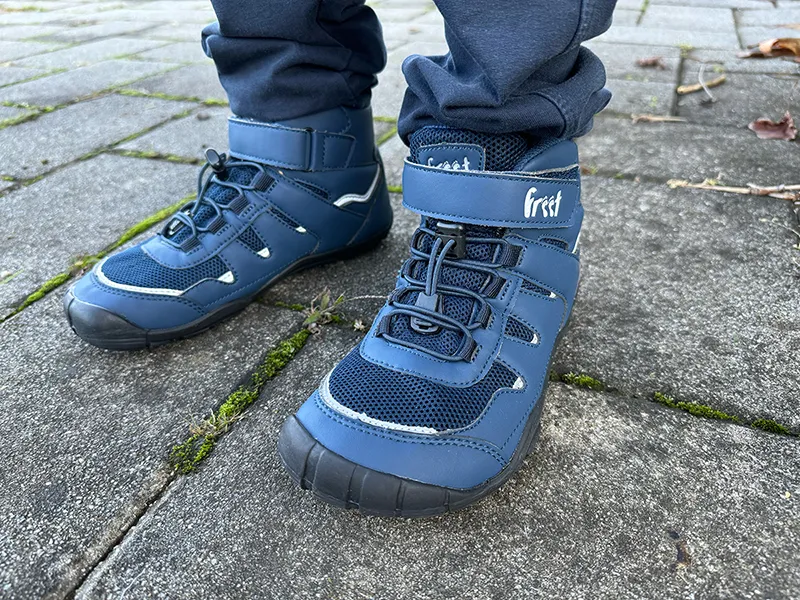
Models: Tufee and Flex Junior
Why we like them: Soft, barefoot-friendly hiking shoe with great grip and flexibility.
Fit: Suitable for medium and wide feet (Tuffee feels narrower than the Flex Junior model)
Use code BU_FREET for 10% discount
Ballop
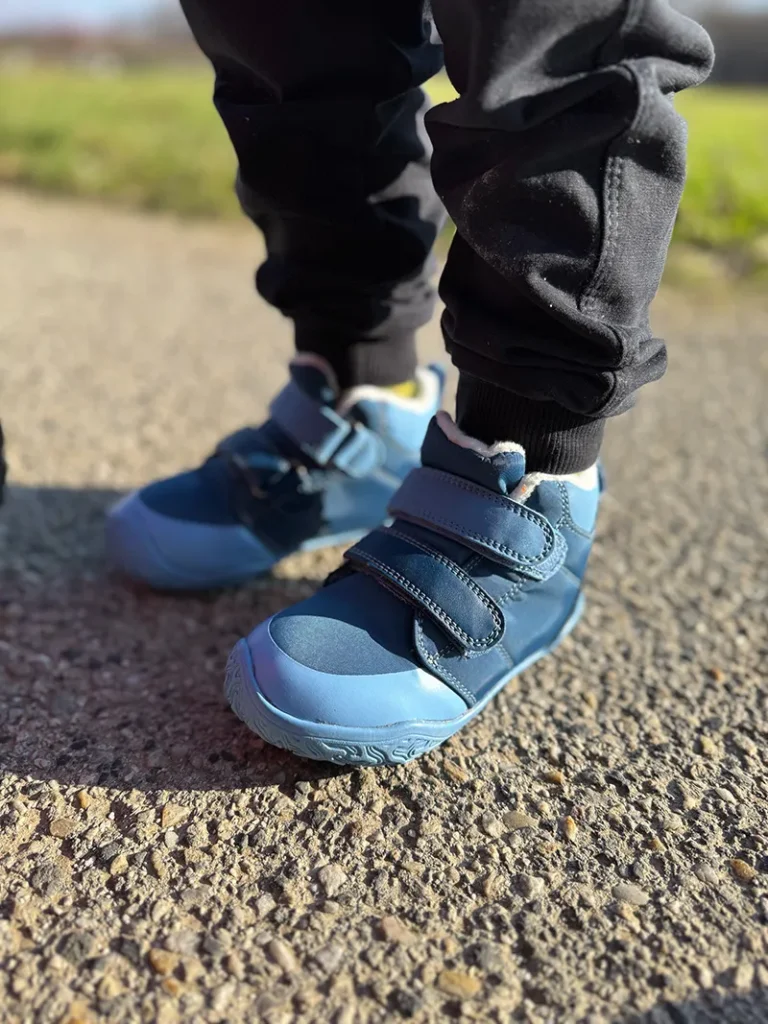
Why we like them: Good budget-friendly barefoot shoe for hikes and everyday play.
Fit: Narrow and medium-width feet, average volume.
Use BU15 for 15% discount
How to Choose the Right Pair for You
Not all barefoot hiking shoes feel the same on the trail. Some are thin and flexible, some sit in the middle, and some have a much thicker, more forgiving sole. That’s why the best choice depends not just on fit, but also on how much ground feel, protection, grip, and structure you want underfoot.
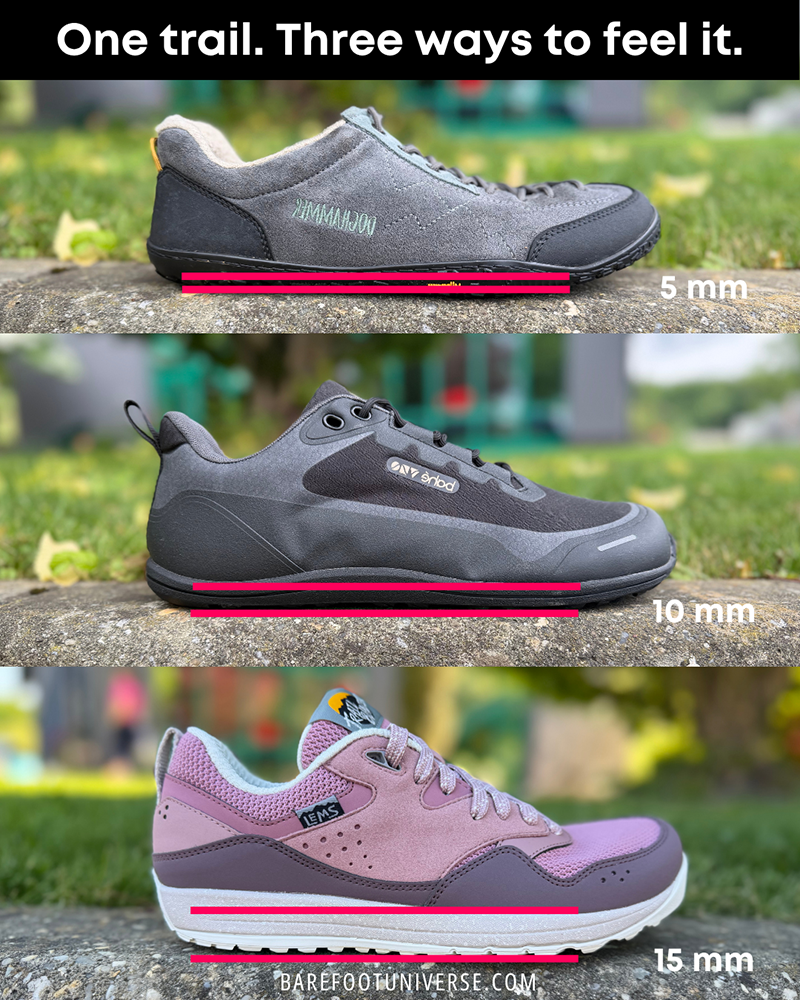
If you already know what kind of feel you prefer, this quick guide will help you narrow things down faster.
| Need | Go with |
|---|---|
| Waterproof + rugged | Vivobarefoot Tracker, Freet Mudee, Xero Scrambler Mid WP, Softstar Shoes Switchback |
| Light + breathable | Freet Feldom, Doghammer, Magical Shoes, Saltic |
| Extra wide feet | Softstar Switchback II, Proalp Contact S2, Ahinsa Hiker xWide, Freet |
| Vegan option | Ahinsa, Saguaro, Xero Shoes, Bahé |
| Cold-weather ready | Vivobarefoot Tracker, Freet, Proalp Contact S2 |
| Beginner-friendly / more cushion | Lems, Bahé, Xero Ridgeway, Altra Lone Peak |
| Budget-friendly | Saguaro |
| Thinnest ground feel | Ahinsa Chitra, Saltic Vintero, Magical Shoes, Doghammer |
| Best wet grip | Softstar Switchback II, Proalp Contact S2 |
| Best for easier hikes + long walks | Lems, Altra Lone Peak, Xero Ridgeway, Magical Shoes, Doghammer |
| Best for serious mountain terrain | Vivobarefoot Tracker, Freet Mudee, Proalp Contact S2, Softstar Switchback II, Bär Shoes |
Outsoles, width, and toe box shape can vary a lot from one model to another, and this visual can help you get a better sense of what might work best for your feet and the kind of terrain you hike on.
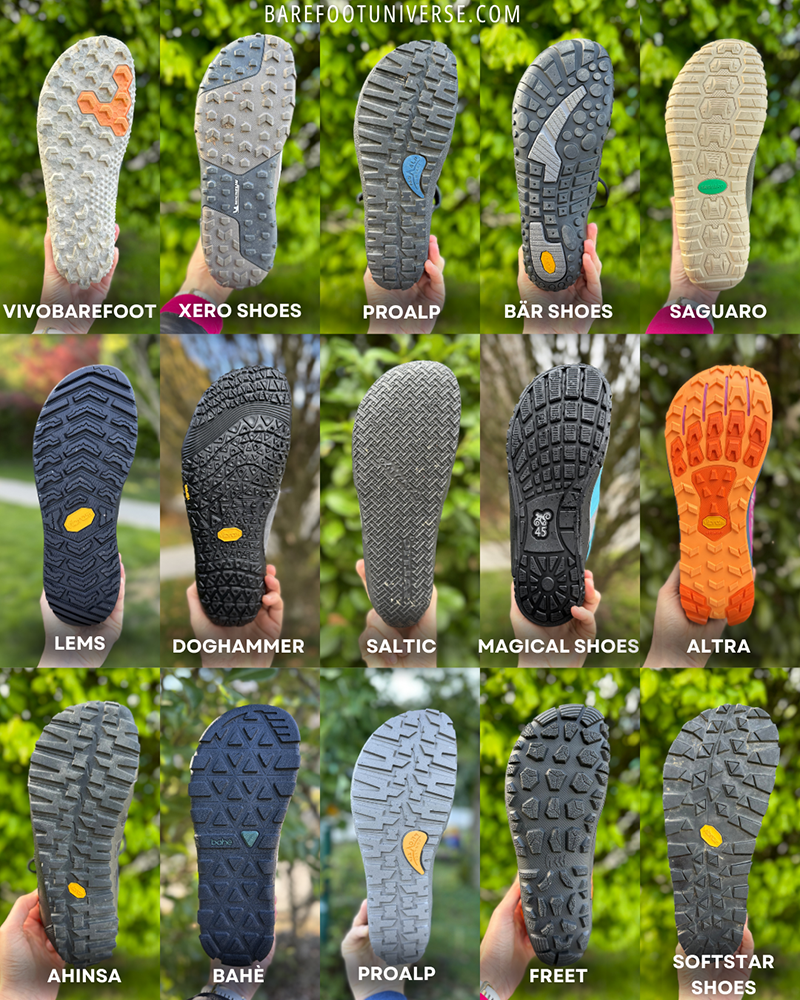
That’s also why some shoes on this list work better on wet grass, forest trails, and muddy ground, while others make more sense for easier hikes, everyday outdoor wear, or hikers who simply want a bit more cushion.
Final Thoughts: Hike Naturally, But Wisely
Barefoot hiking is a powerful way to reconnect with your body, your feet, and the trail beneath you – but only if you’re wearing the right pair. Each brand listed above respects the natural foot shape and lets your toes spread and flex as they were designed to.
Start slow, pick a pair that suits your trail needs and foot shape, and enjoy hiking in a way that actually feels like freedom.
Still not sure which shape or fit will work best for your feet? Start with our guide to finding the right barefoot shoes for your foot type.
Hello,
how does the Realfoot Toebox compare to Softstar? Especially the Primal Sawyer or similiar models? I own the Realfoot City Jungle but had to size up because the taper is too aggressive for my pinky. It doesn’t have enough space in front of the toe, even though I left 12 mm space in front of my longest toe.
The Softstar Primal Sawyer seems to have less taper, but maybe the pictures deceive.
Cheers
Hi Chris, we cannot directly compare it to the Softstar Primal Sawyer as we don’t have it, but we can compare it to the Softstar Switchback boots. There is more vertical space in the Realfoot Trekker than in the Softstar Switchback, and therefore, the Realfoot feels wider than the Softstar, even though the outsole shape is almost the same in the toe area. I have more space for my pinky toe in the Realfoot. Hope this helps!
Hi Katja,
thanks for your fast response. That was helpful and saves me from trying out Softstar then, since I already had to size up the Realfoot because of missing pinky space.
Since you already tested the barefoot+ Models from Groundies: how do they compare space wise to Realfoot shoes, especially for the pinky toes?
Going purely by the numbers the Groundies look less wide (even if I add the 5mm you mention in your review), and the taper on the pinky seems more aggressive (so easier to touch the front with the pinky toe). Is that correct?
Hi Chris, Groundies Barefoot+ are not as wide as Realfoot. I have much more space for my pinky toe in Realfoot than in Groundies. However, Groundies are slightly wider in the midfoot and heel parts.
Do you have any favorite picks that work well on slick granite? My hikes combine all sorts of elements and I still haven’t found shoes that I’m comfortable on wet rock in… (and or ice for winter city walking)
Hi Meredith,
Honestly, slick granite and ice are some of the trickiest surfaces for any shoe. I’ve found that soles with sticky rubber (like Vibram Megagrip) tend to give the best grip on wet rock, though no shoe will feel 100% secure there. For winter walking on ice, I’d really recommend using additional traction like microspikes, since even the grippiest rubber can’t fully handle ice on its own.