




Best Barefoot Winter Boots for Snow (Warm, Waterproof & Foot-Shaped)

 REVIEWER FIT REFERENCE
Affiliate disclaimer

Winter doesn’t mean your toes suddenly deserve less space.
Most people assume barefoot shoes and snow don’t go together. That once temperatures drop, squished toes, raised heels, and stiff soles are just part of winter life. But if you actually want to spend time outdoors in winter – walking, playing, standing, exploring – that compromise stops making sense.
Barefoot winter boots exist so your feet can stay warm and move naturally, even in snow. Wide toe boxes for circulation. Zero drop for balance. Flexible soles that still let your feet work instead of locking them in place.
We dug through winter-ready barefoot boots, tested what actually works in cold and snow, and filtered out the models that look warm but fail once conditions get real. Below, we’ve grouped the best barefoot winter boots for snow by real-life use cases so you can quickly find what works best for your climate, feet, and winter routine.
Update (January 2026): This guide has been fully updated with new barefoot winter boot models, improved snow-performance testing, and clearer recommendations based on insulation, waterproofing, and fit.
What Makes a Barefoot Winter Boot Suitable for Snow?
Choosing barefoot winter boots for snow isn’t about finding the thickest sole or the most aggressive tread. It’s about understanding how warmth, moisture, and movement work together in cold conditions.
Warmth in barefoot snow boots comes from toe space, movement, and insulation, not stiff soles. When your toes can spread, circulation improves. When your feet can move, muscles stay active and generate heat. The right materials then help retain that warmth instead of trapping cold.
Waterproofing is another key factor, especially for wet snow and slushy conditions. Some barefoot winter boots rely on treated leather, while others use waterproof membranes. Neither is automatically better. The right choice depends on how wet your winters are and how long you’re outside.
Finally, traction helps, but it’s not a magic solution. Barefoot winter boots prioritize ground feel and flexibility, which means grip comes from smart sole design and mindful movement rather than bulky lugs.


If you’re new to winter barefoot footwear, you may also want to explore our guides to best everyday barefoot boots and best waterproof shoes and boots to better understand the differences between everyday winter boots and true snow-ready options.
Best Barefoot Winter Boots for Deep Snow & Cold
These are the barefoot winter boots for snow we actually recommend – worn, compared, and tested in real winter (including wet snow, deep cold, and yes, one slightly obsessive walk with different boots on each foot at -20°C).
Vaistoa Hanki 2


Use BU15 for 15% discount
The Vaistoa Hanki 2 is one of the best barefoot winter boots we’ve worn for deep snow. What surprised us most right away is how light they feel on the foot, even in proper winter conditions. They don’t feel bulky or heavy, which makes walking in snow much easier and more natural. The lacing system is simple but effective and lets us adjust the fit really precisely, even over thicker socks.
These snow boots hit the perfect height to handle even deep snow while keeping your calves warm, and they’re incredibly easy to put on thanks to a smart lacing system that makes getting a secure, perfect fit quick and effortless.
They’re made from vegan materials, and when we first put them on, they didn’t look or feel heavily insulated, but in real use, they turned out to be warmer than we expected. At around –5 °C, our feet stayed completely fine even after four hours in the snow. In very cold conditions, around –20 °C, toes started getting cold after about half an hour. For longer exposure to cold at those temperatures, the boots on their own aren’t warm enough, and adding a sheepskin or wool insole could provide the extra insulation needed.
What we really like is the ground feel. For a winter boot, it’s excellent. Traction feels reliable in snow, and the sole stays flexible enough that your feet can still move and work. The only thing we miss is that cozy, soft feeling you get from a wool lining. These boots feel more functional than cuddly, which isn’t a dealbreaker, just something to be aware of.
Ships within the EU only.
Sizing & Fit: Fit-wise, they work well for narrow to wide feet, with plenty of space above the toes, which helps circulation in cold weather. We recommend sticking with your usual barefoot shoe size, as it already provides plenty of room. Size up if your feet are extra wide or high volume, or if you plan to use very thick socks or insulating insoles.
(For reference, I wear size EU 42 with foot dimensions 26.3 / 10 cm.)
Why we like it: Light, perfect height, easy to put on, adjustable, easy to clean and genuinely capable in deep snow, with great ground feel and more warmth than expected, especially when paired with a wool or sheepskin insole for colder days.
Xero Shoes Alpine


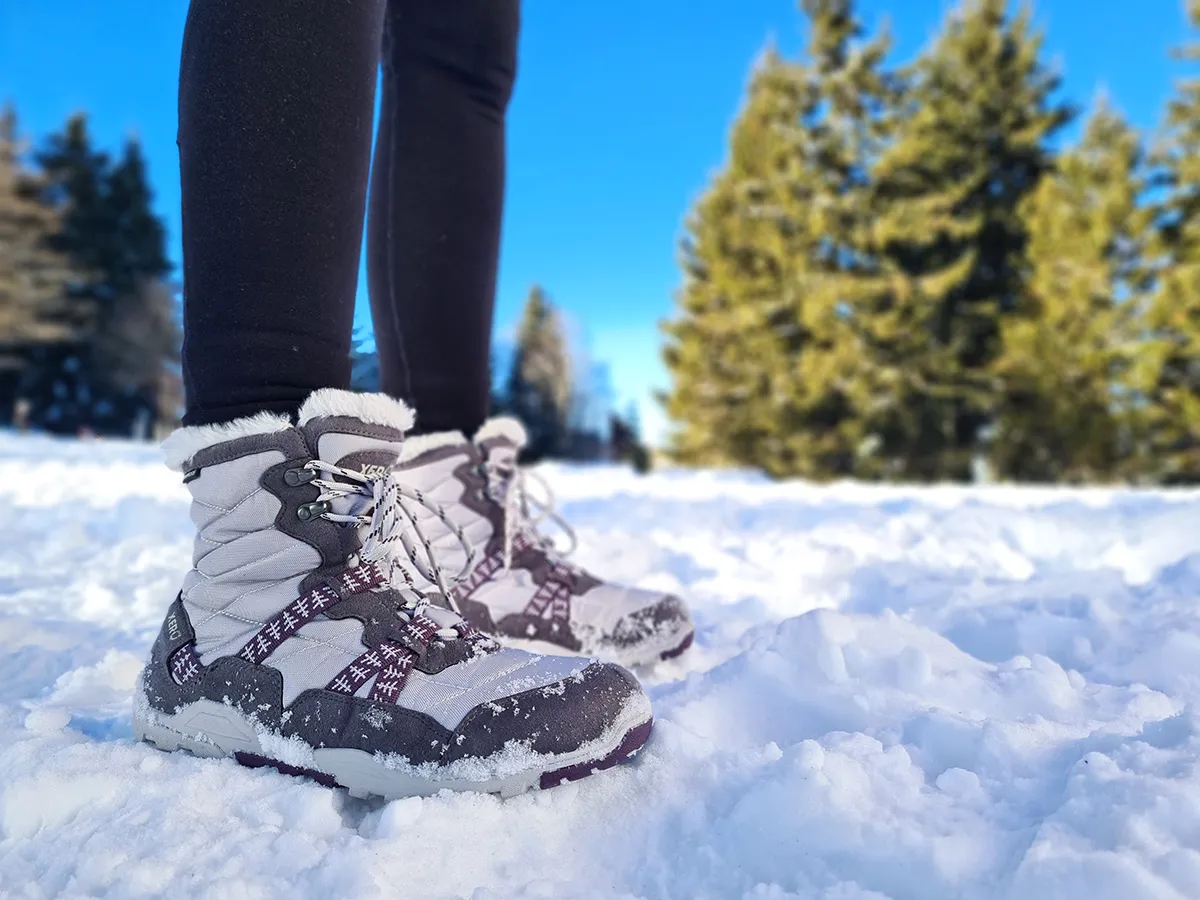
The Xero Alpine is built as a zero drop winter boot and is a solid barefoot winter boot for deep snow and cold, especially if you prefer a more traditional winter boot look. It doesn’t immediately look “barefoot” and comes in several colors and styles (including a slip-on version), which makes it easy to wear for regular winter use. The shaft is high enough to keep snow out, and the laces are easy to adjust around the ankles and calves.
They feel noticeably more structured than some other barefoot winter boots on this list. The sole is on the thicker side, so you don’t get much ground feel, and the ride feels firmer and a bit clunkier. That said, this thickness does help with insulation. One thing to note is that the fluffy lining is only at the top of the boot, while the rest of the interior has a thinner lining. Swapping the insole for a wool or sheepskin insole is an easy way to increase warmth.
Sizing & Fit: Fit-wise, the Alpine works best for narrow to medium-width feet, with men’s versions offering a bit more width and volume than women’s. There’s plenty of vertical space above the toes, which helps with circulation in cold weather. Sizing can feel a bit tricky, but sizing up half a size to a full size works well if you need extra width or plan to use thicker socks or insoles.
Why we like it: A dependable barefoot snow boot with a familiar winter look, good adjustability, and extra warmth, as long as you’re okay trading ground feel for insulation.
VIVOBAREFOOT Tundra ESC


Use BU15 for 15% discount
The Tundra ESC is one of the warmest barefoot winter boots we’ve worn and easily one of the best barefoot boots for very cold climates. It’s also one of the most heavily insulated barefoot snow boots we’ve tested.
That said, it’s not a subtle boot. The Tundra feels big and clunky, especially compared to lighter barefoot winter models, which makes it less enjoyable for regular winter use. It’s also a significant investment, so it makes the most sense if you truly need a winter boot for harsh conditions.
Even with all that insulation, it’s not magic. In extreme cold, around –20 °C, our toes still started getting cold after about half an hour.
Sizing & fit: They work best for narrow and medium-width feet. If you’re between widths or need a bit more room, choosing the men’s version can give you some extra width.
Why we like it: One of the warmest barefoot winter boots available, with decent toe space and serious insulation, best suited for cold climates and deep snow, especially if you’re not moving around a lot, not for lightweight daily winter wear.
Koel Rana & Liam


Use BFUNIVERSE for 5% discount at Mugavik Barefoot
Koel offers one of the widest selections of barefoot winter boots suitable for snow, with multiple styles, colors, and options for both women and men. Winter models come with either thicker lambswool lining or thinner felt lining, making it easier to choose based on your climate. For snowy and colder conditions, the lambswool-lined versions are the warmer option.
Compared to Koel sneakers, winter boots have thicker soles, offering more protection and traction in winter. Ground feel is reduced, but they’re still among the thinnest soles on this list, and they soften with wear, becoming more comfortable over time.
Water resistance varies by model. We had a good experience with the Liam, while results with the Rana and some other Koel winter models were more mixed. With longer exposure to snow, the wool lining can get damp and takes a long time to dry, which is worth keeping in mind for wet winter conditions.
The Rana is a super tall boot that protects well in deep snow and is surprisingly easy to put on, thanks to elastic laces over the instep. The Liam is lower and uses traditional laces that often need loosening, making it a bit slower to put on and off. Liam also isn’t ideal for high-volume feet.
Sizing & fit: Best for narrow and medium-width feet with a low to average instep. Not ideal for high-volume feet, although the Koel Rana offers more volume. We recommend sizing up in Koel winter boots to allow space for thicker socks; both Rana and Liam can work for slightly wider feet if sized up.
Why we like it: Warm, cozy barefoot winter boots with lots of choice in styles and linings, best for narrow and medium-width feet and those who want snow-ready boots without overly thick soles.
Bär Shoes Runa

Use BU10 for 10% discount
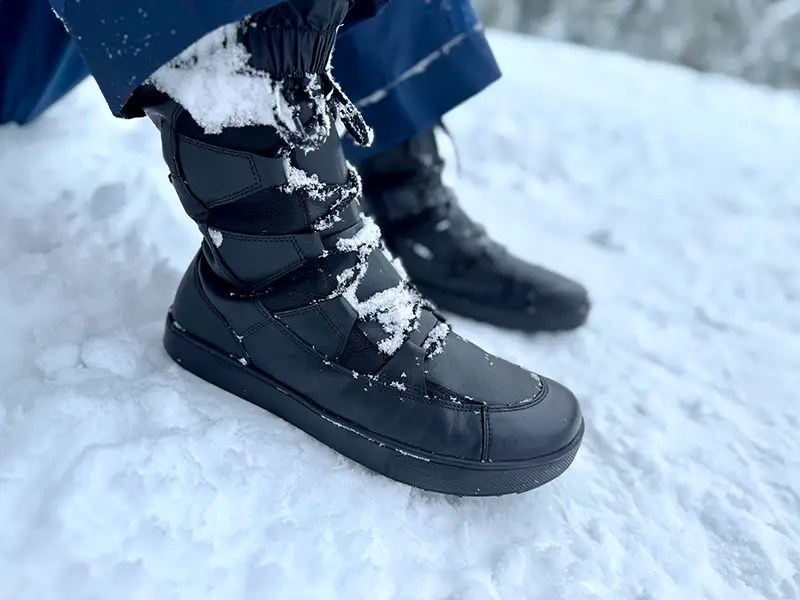
The Runa stands out for its high-quality design and very cozy, warm feel. It’s a super tall winter boot, which does a great job of protecting both feet and lower legs in deep snow. The overall build feels premium, and the side zipper makes it much easier to get on and off, especially in winter conditions.
These boots are extra warm and comfortable, but they’re not fully barefoot. The sole is thicker and has a small heel rise, which reduces ground feel and takes them slightly outside strict barefoot criteria. Because of that, we see them as a good option for those who want wide toe box winter boots with warmth and comfort, rather than a fully minimal barefoot experience.
The leather quality is high, but one thing we noticed is that it can be sensitive to road salt. On our pair, the leather reacted to salt from winter streets, so regular care and protection are important if you’re wearing them in urban winter conditions.
Sizing & fit: The Runa is available in women’s sizes only, including half sizes, and comes in two widths. They work best for narrow to medium-width feet, with narrow to average calves. Sizing up half a size to a full size works well, especially if you plan to wear thicker socks.
Why we like it: A very warm, well-made winter boot with excellent leg coverage – best for those who prioritize comfort and warmth and are okay with a small heel rise over a fully barefoot sole.
Best Waterproof Barefoot Snow Boots for Wet Conditions
These barefoot snow boots are good additional options if you don’t need the very tall, deep-snow boots from the section above, but still want reliable waterproofing for wet snow, slush, and melting conditions.
Below are the barefoot snow boots that handled wet, melting snow and slushy winter conditions best, while still keeping a foot-shaped fit and natural movement.
If waterproofing is your top priority, we’ve also rounded up the best waterproof barefoot shoes and boots.
Freet Arken 2


Use code bu-freet for 10% discount
The Arken 2 is a waterproof barefoot outdoor boot that we’ve found works best as an everyday winter boot for the colder part of the year, and it also performs well for hiking on colder days. It can feel a bit firm at first, but it softens nicely with wear and becomes more comfortable over time.
It’s not ideal for deep snow, as snow can get in around the heel due to the lower cut, but the ankle-boot design allows for good ankle movement, which we appreciated for daily walking.
Sizing & Fit: Works best for medium and wide feet. We recommend sizing up one full size from your regular barefoot shoe size for a comfortable fit, especially with winter socks (I’m wearing size EU 43 with foot dimensions 26.3 / 10 cm).
VIVOBAREFOOT Tracker Winter


Use BU15 for 15% discount
The Tracker Winter is a well-made, waterproof barefoot winter boot with a clean, stylish look. It’s available in men’s and women’s sizes, with overlapping sizes that offer two width options.
It’s not a tall boot, so it doesn’t protect the calf in deep snow, but it works well in wet snow and slushy conditions. Warmth is moderate rather than extreme, and swapping the insole for sheepskin or wool helps in colder weather. The ankle and heel can feel a bit firmer compared to softer winter boots.
Sizing & Fit: Best for narrower feet, with a stronger toe slope toward the pinky toe. Men’s models are slightly wider and can work for medium-width feet. They adjust well to different foot volumes but are relatively shallow above the toes, which may feel restrictive for some.
Vaistoa Uoma 3


Use BU15 for 15% discount
The Uoma 3 is a fully waterproof, vegan barefoot winter boot that performs very well in wet and cold conditions. It feels sturdy but not stiff, with enough flexibility to stay comfortable for regular winter walking. We’ve reached for it most as an everyday winter boot rather than for deep snow.
Warmth is best suited to milder winter conditions, especially when snow is wet or melting. Ships within the EU only.
Sizing & Fit: Works well for narrow to wide-ish feet and adjusts easily to different foot volumes, making it a versatile option if your feet don’t fit neatly into one category.
Best Budget Barefoot Winter Boots for Snow
Saguaro Rise


Use BU20 for 20% discount (new costumers)
Use BU15 for 15% discount (existing customers)
The Saguaro Rise is one of the most affordable barefoot snow boots we’ve tried and a good entry point if you’re curious about barefoot winter boots without a big investment. They’re lightweight, made from vegan materials, and feel easy to wear right away.
Traction is good in snow, though we found them slippery on ice. They’re water-resistant rather than fully waterproof – after longer exposure to wet, melting snow, the upper started to soak and the inside became damp. For short winter walks and lighter snow, they work better than for prolonged wet conditions.
Sizing & Fit: Best for medium-width feet. The toe box narrows slightly toward the front, so we strongly recommend sizing up one full size (both from the size chart and from your usual barefoot shoe size). Despite that, the overall shape adjusts well to different foot volumes.
Best Barefoot Winter Boots for Wide Feet
These are the widest barefoot winter boots we’ve tested and found to work best for wider feet.
If you’re unsure how wide your feet are, take our Foot Width Quiz before choosing winter boots. You can also explore our guide to the best barefoot shoes for wide and extra-wide feet for more wide-fit options across seasons.
Jenon Leather Snowflake


Use BU10 for 10% discount
The Snowflake is a leather barefoot winter boot with a sheepskin lining, and it feels warm and cozy right away. The tongue is not gusseted, so we wouldn’t immerse them in deep, wet snow, but for everyday winter conditions they work well.
What really sets Jenon apart is full customization. The standard shape fits medium and wide feet with low to average volume, but if your feet are hard to fit, this is one of the few brands where you can truly adjust the boot to your needs. You can also choose your own colors, which makes them a great option if fit and personalization matter more than off-the-shelf convenience.
Shapen Frosty 2.0
Use code BOSENOGICE5 for 5% discount
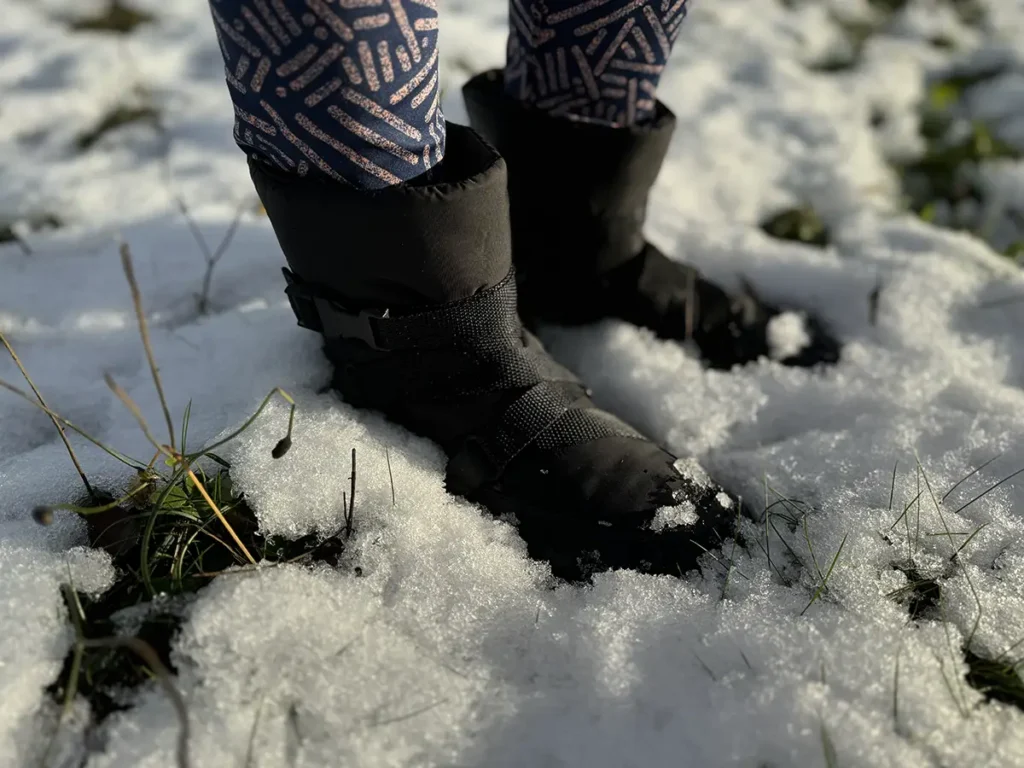
The Frosty 2.0 is an urban barefoot winter boot with a more fashion-forward look. It’s light and easy to wear, with a fleece lining that feels comfortable but isn’t heavily insulated. We found it works best for milder winters rather than very cold conditions.
The slip-on design makes it quick to put on, and the adjustable strap helps secure the fit. They’re easy to clean and offer good water resistance in everyday winter conditions, making them a practical option for city wear.
Best Barefoot Winter Boots for Kids (Snow-Ready)
We’ve tested barefoot winter boots for kids separately. You can find our full, snow-tested kids guide here.
How We Tested Barefoot Winter Boots for Snow
We didn’t test these barefoot winter boots in theory – we chased winter in them. That meant walking through wet, melting snow, slushy streets, icy paths, deep snow, and long cold walks, not just short errands. We wore them in freezing temperatures down to –21 °C, and some boots were tested at the same time, with a different model on each foot, so we could directly compare warmth and overall feel in identical conditions.


We also pushed them in wet conditions, walking through melting snow and deep puddles to see if and when moisture got in, and how the boots behaved once damp. Traction was tested on packed snow, fresh snow, and ice, knowing that no winter boot is truly slip-proof, but that some designs clearly perform better than others.
Boots were worn on different foot widths and volumes, with and without thick wool socks and insulating insoles, to see how fit, circulation, sole design, and materials affected warmth, stability, and comfort over time.
Only the boots that performed well in real winter conditions, not just on paper, made it into this guide.
(For full details on our testing approach, you can also read our complete How We Test Barefoot Shoes guide.)
How to Keep Your Feet Warm in Barefoot Winter Boots
Even the best barefoot winter boots won’t feel warm if the rest of the setup doesn’t support them. Staying warm in snow is less about “more shoe” and more about how everything works together.

Choose the right winter model
Not all barefoot boots are meant for snow. Wool-lined and sheepskin-lined models generally offer the most warmth, especially for longer outdoor time.
Waterproof when needed
Wet feet get cold fast. Make sure your barefoot winter boots are properly waterproofed, especially if you’re dealing with wet snow or slush.
Use wool or sheepskin insoles and warm socks
Wool or sheepskin insoles add insulation from the ground, while thick wool socks or toe socks help retain warmth without restricting circulation.
Size and width matter more in winter
Winter barefoot boots often work best when you size up slightly to allow room for thicker socks and natural foot movement. Toe space and air circulation are key to warmth.
Dress your whole body for winter
Cold feet are often a sign that the rest of the body isn’t warm enough. Proper layers make a real difference.
Keep moving
Barefoot footwear relies on active feet. Gentle movement improves circulation and helps keep feet warm, even in cold conditions.
Conclusion
Winter doesn’t mean giving up toe space or natural movement. With the right barefoot winter boots, you can stay warm, dry, and comfortable in snow without forcing your feet into stiff, narrow shoes.
The key is choosing a boot that matches your climate, your feet, and how you actually spend winter, whether that’s deep snow, wet slush, or everyday city walking.
If you’re still unsure, checking foot width, volume, and insulation needs can make the decision much easier.

Hi, did you maybe notice with Koel Levi that leather gets white/worn out look quickly? Any experience with other colors besides black?
Hi Ana,
I personally haven’t noticed the leather turning white on the Koel Levi. I actually wear this model a lot, as well as some of the other Koel winter models made from the same leather, and they all hold up really well. I only have them in black though, so I can’t comment on how other colors behave.
When you say the leather gets ‘white’, do you mean like fading or scuff marks? Just asking so I can better understand your experience.
Hi, thanks for the reply. Yes I meant more fading.
I’m curious, did you try any of Be Lenka’s offerings? I got the Snowfox but they just weren’t warm enough in Lapland this week. I’d be interested to know if any of these options are warmer – but I’m wide footed so can’t do the narrow to medium options.
Hi Laura, yes, we’ve tried the Be Lenka Snowfox. Warmth really depends a lot on how the boot fits your foot and how much your foot can still move inside, not just on insulation alone.
Some boots (like Vivobarefoot Tundra) do feel warmer on their own, but if the fit isn’t right, that warmth doesn’t always translate in real conditions. If Snowfox weren’t warm enough for you, it’s definitely worth trying a different model.
Vaistoa worked really well for me. They come up higher, lace securely, and feel more protective overall, which helped with warmth too.
Thank you. A great tip I got whilst I was away was to use hand warmers in your boots, that definitely helps if the shoes aren’t quite warm enough or you’re out for a long time!
That’s a great tip! Thank you for sharing <3 Hand warmers can be a lifesaver on long, cold days, especially when conditions are extreme.